Charismatic species are all highly sought after animals for zoological collections, their popularity has been a factor that has drawn in many visitors to zoos around the world [1]. However, the drive for attaining these animals has led to many welfare issues surrounding these species, one species which has recently been under scrutiny for its welfare is the Chimpanzee [2]. The Chimpanzee is a charismatic animal which through study has been listed as the eleventh most charismatic species on the planet [3]. This has led to zoological collections being driven towards owning these animals, for conservation purposes as well as to increase visitor numbers because people are more willing to pay to help conserve this charismatic species [4]. Due to chimpanzees sharing 98% of their DNA with humans, they are the subject of large amounts of medical testing, this can have detrimental impacts on their welfare when in laboratory environments [5].
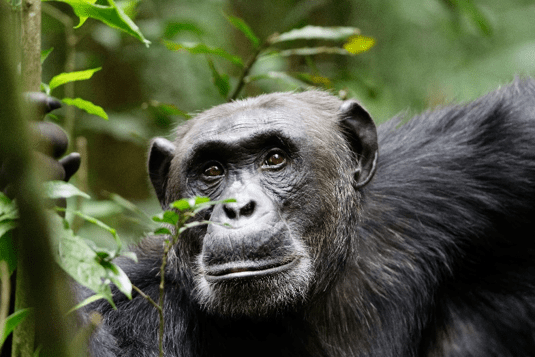
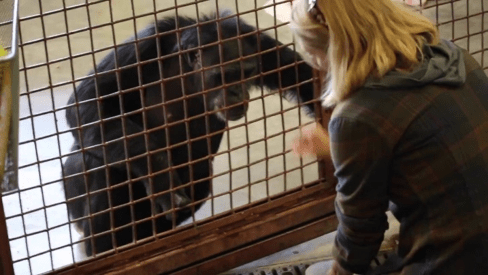
The impacts on welfare in captive Chimpanzees can be both positive and negative. One good example of positive welfare impacts Is the training of chimpanzees through positive reinforcement training, which is the process in which good behaviours can be promoted through praise and reward [6]. The use of positive reinforcement training has allowed for the welfare of Chimpanzees in zoological and laboratorial settings to be increased as this technique helps reduce stress when undergoing scientific procedures such as blood sample collection [7]. Scientific studies have also shown that positive reinforcement training can reduce the time chimpanzees can be found carrying out inactivity or solitary activities during training, thus improving their social interactions during and outside of training sessions [8]. This positive reinforcement training also builds positive keeper animal relationships, as data suggested that trained animals had a reduced latency to a keeper’s cue, this shorter response time indicates reduced fear or stress and so has a positive impact on the animals welfare [9].
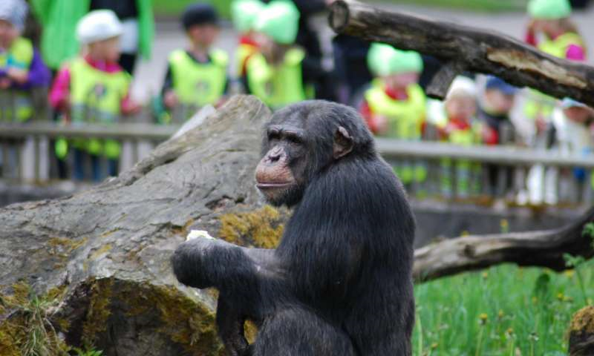
Although human actions can show positive welfare implications through the training we provide, there are still negative impacts occurring. One of the most prevalent is the visitor effect, zoological collections see many visitors day in and day out, however, the number of visitors and disturbances they can cause can have detrimental effects on the welfare of animals such as the chimpanzee [10]. Although this can have a negative impact on welfare, the visitor effect can also cause no change in welfare and in some cases can even increase the welfare of animals who come into close proximity with visitors [11]. Through a series of studies carried out to investigate the effect of noise levels on mammals, it was found that when exposed to higher noise levels the behaviour of individual animals changed drastically, movement was increased and the animals showed higher levels of alertness as if looking for safety [12]. This shows a clear decrease in welfare as an animal showing higher alertness is usually under stress and so alters its usual behaviours to reduce its stress levels, this can result in diet changes and in turn reduce nutritional condition as an animal under stress may reduce its eating pattern [13]. This negative effect caused by human interactions can be avoided however, but would require zoos to alter enclosure designs to facilitate for reduced noise levels and overcrowding of visitors [12].
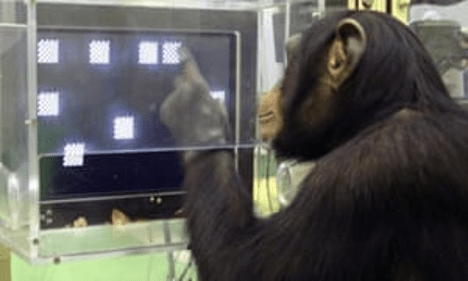
A good example of actions which have increased the welfare of captive chimpanzees is the use of cognitive research training, which is a method of training which can be enriching for the animal whilst also allowing scientists to study the intelligence of these animals [14]. A study found that cognitive research has no negative effects on chimpanzee welfare and in come cases can improve their welfare due to the enrichment that these tests can provide, this was discovered through the repeated interest shown by chimpanzees who had already partaken in one of these tests [15]. Because of the absence of negative welfare effects associated with cognitive training, it is seen as an ethical practice which has given us a good insight into the inner workings of the chimpanzee brain, and allows us to explain the difference which have arisen between the chimpanzee and human brain [16].
Another example of a negative welfare impact is the newfound transmission of disease being spread from humans to captive chimpanzees. Zoonosis is the transmission of diseases between human and animals, there are many present such as Rabies, Lyme Disease and Malaria [17]. A recent study found that many chimpanzees in nature reserves and zoos have contracted zoonotic diseases such as a human respiratory syncytial virus (HRSV) and human metapneumovirus (HMPV), this has caused decrease in welfare as this newly contracted disease led to many chimpanzees becoming sick and some dying [18]. Another incident occurred in Copenhagen Zoo, an outbreak of coxsackie B3 virus occurred which resulted in respiratory symptoms in all chimpanzees in the zoo and led to the death of one female, after extensive research into her death it was found that the virus she contracted was of human origin [19]. The contraction of disease in primates can lead to physical health decline and in turn a reduction in welfare [20], because of human interaction with primates without the necessary means to prevent disease control, the welfare of many chimpanzees has been reduced.
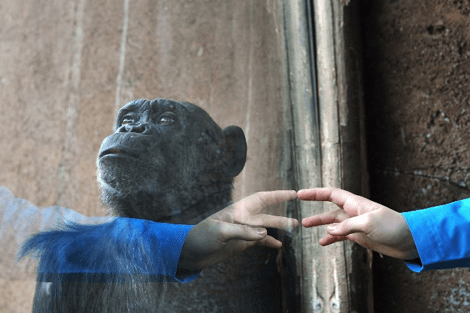
In conclusion, the impact of human action on the welfare of captive chimpanzees can be deemed neither positive nor negative as there is not enough hard evidence to distinguish between good and bad welfare. It is near impossible to increase the welfare of a captive animal to one hundred percent, due to the signs of welfare in animals being so hard to read. The arguments and issues surrounding animal welfare has divided many people and will continue to until we find suitable methods of accurately reading an animal’s welfare, through physiological, mental and behavioural changes. However, due to the rapid development of new technologies this may be available in the near future.
References
| [1] | A. Whitworth, “An Investigation into the Determining Factors of Zoo Visitor Attendances in UK Zoos,” PLOS ONE, p. 1, 2012. |
| [2] | S. Neal Webb, J. Hau and S. Schapiro, “Captive chimpanzee (Pan troglodytes) behavior as a function of space per animal and enclosure type,” NCBI, pp. 1-5, 2018. |
| [3] | C. Albert, G. Luque and F. Courchamp, “The Twenty Most Charismatic Species,” PLOS ONE, p. 1, 2018. |
| [4] | A. Colleony, S. Clayton, D. Couvet, M. Jalme and A. Prevot, “Human preferences for species conservation: Animal charisma trumps endangered status,” Biological Conservation, pp. 263-269, 2017. |
| [5] | NAVS, “Use of Chimpanzees in Research,” 23 March 2016. [Online]. Available: https://www.navs.org/what-we-do/keep-you-informed/legal-arena/research/use-of-chimpanzees-in-research/#.XkAuzmj7RPY. |
| [6] | M. Allen, “What is Positive Reinforcement Training?,” August 2012. [Online]. Available: https://www.petcarerx.com/article/what-is-positive-reinforcement-training/2854. |
| [7] | L. Reamer, R. Haller, E. Thiele, H. Freeman, S. Lambeth and S. Schapiro, “Factors affecting initial training success of blood glucose testing in captive chimpanzees (Pan troglodytes),” Wiley Online Library, 2014. |
| [8] | E. Lonsdorf, S. Ross and T. Matsuzawa, The Mind of the Chimpanzee, Chicago: The University of Chicago Press, 2010. |
| [9] | S. Ward and V. Melfi, “The implications of husbandry training on zoo animal response rates,” ScienceDirect, pp. 179-185, 2013. |
| [10] | S. Sherwen and P. Hemsworth, “The Visitor effect on Zoo Animals: Implications and Opportunities for Zoo Animal Welfare,” NCBI, 2019. |
| [11] | S. Sherwen, “The Visitor effect: an investigation into the impact of visitors on the behaviour and welfare of zoo animals,” The University of Melbourne, p. 1, 2015. |
| [12] | S. Quadros, V. Goulart, L. Passos, M. Vecci and R. Young, “Zoo visitor effect on mammal behaviour: Does noise matter?,” ScienceDirect, 2014. |
| [13] | S. Ciuti, J. Northrup, T. Muhly, S. Simi, M. Musiani, J. Pitt and M. Boyce, “Effects of Humans on Behaviour of Wildlife Exceed Those of Natural Predators in a Landscape of Fear,” PLOSONE, 2012. |
| [14] | V. Hughes, “Like in Humans, Genes Drive Half of Chimp Intelligence, Study Finds,” 12 July 2014. [Online]. Available: https://www.nationalgeographic.com/news/2014/7/140710-intelligence-chimpanzees-evolution-cognition-social-behavior-genetics/. |
| [15] | E. Herrelko, S. Vick and H. Buchanan-Smith, “Cognitive Research in Zoo-Housed Chimpanzees: Influence of Personality and Impact on Welfare,” American Journal of Primatology, 2012. |
| [16] | T. Matsuzawa, “Evolution of the brain and social behaviour in chimpanzees,” Chimpanzee AI, 2013. |
| [17] | MedicalNewsToday, “Types of Zoonotic Diseases,” 15 January 2018. [Online]. Available: https://www.medicalnewstoday.com/articles/320618.php. |
| [18] | M. Rozenbaum, “Human diseases are threatening chimpanzees,” 1 March 2019. [Online]. Available: http://www.understandinganimalresearch.org.uk/news/animal-welfare-alternatives/human-diseases-are-threatening-chimpanzees/. |
| [19] | S. Nielsen, T. Mourier, U. Baandrup, T. Soland, M. Bertelsen, M. Thomas, P. Gilbert and L. Nielsen, “Probable Transmission of Coxsackie B3 Virus from Human to Chimpanzee, Denmark,” NCBI, 2012. |
| [20] | “Welfare of primates: physical health,” 20 November 2015. [Online]. Available: https://www.nidirect.gov.uk/articles/welfare-primates-physical-health. |
UOP = 936738
 The Effects of Human Action on Captive Chimpanzees: The Positives and Negatives